Bible prophecy links the following two "seven-year famines" together, though separated by 1300 years. "Seven" is a common number in the bible that symbolizes a perfect time span. It is commonly divided in half as 3½ days/years, (Daniel 9:24-27; 12; Revelation 11-13). As we shall see, the following two seven-year periods are separated by 3½ (figurative) years of years. All this will be explained fully as we continue our study. Ultimately, we will show that the future "seven-year tribulation" period (also divided in half) is tied into these "seven-year famines" by both theme and numeric. It is an exciting study that will both strengthen your faith and quicken your understanding of current events.
Seven-Year Famine of Joseph
Our text of Isaiah 52:4––"At first my people went down to Egypt to live"––pertains to when the children of Israel were compelled to live in Egypt in order to survive a seven-year famine. This seven-year famine fell upon Egypt and "all the world" (Genesis 41:57), and is a prototype of the well-known future "seven-year tribulation-period," also destined to come upon "the whole world" (Revelation 3:10; 16:14).
By means of this famine, the children of Israel and all nations were made to bow before Joseph, (just as they will bow one day before Jesus, [Phil. 2:10]). This seven-year famine, (which began "two years" before Israel entered Egypt, [Genesis 45:6]), lasted spr. 1878 to spr. 1871 BC.
Seven-Year Famine of the Sieges
The sieges of the capital cities of Samaria (of Israel) and Jerusalem (of Judah) also foreshadow this future seven-year tribulation-period, just as Joseph’s famine did. The prophets speak much about these two sieges and the terrible famines that resulted. The seven-year tribulation-period of the Book of Revelation echoes with similar themes (Revelation 6:5; 18:8).{9} Generally, "famine" is the rope that binds our events together thematically.
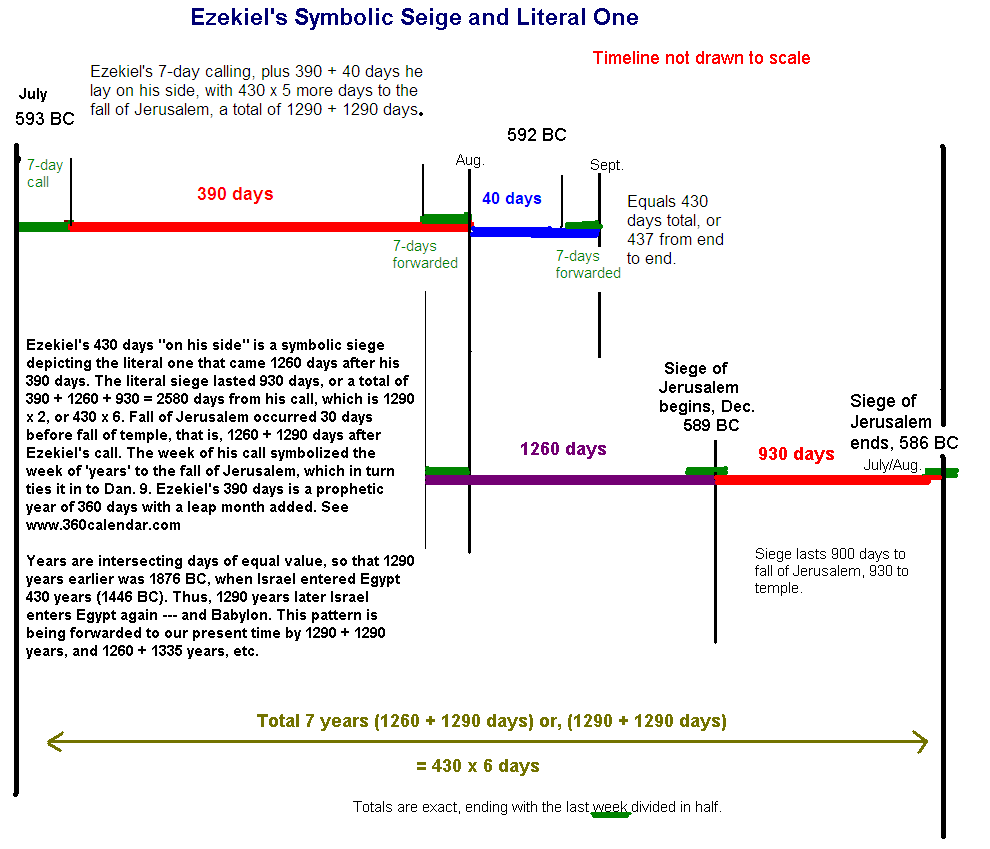
In addition to these famines caused by nature and war, the prophet Ezekiel underwent a self-imposed famine in 593 BC. In obedience to God, He symbolically acted-out a siege against Jerusalem by being tied on his side with ropes (while rationing his food as if in a real famine)––390 days for Israel, and 40 for Judah––"A day for every year," (Ezekiel 4:5-9). This was meant to foreshadow the actual siege and fall of Jerusalem, which in fact did occur exactly seven years later in 586 BC! (Click to enlarge image.)
Next, to ch. 1c
Notes: (For notes 1 - 8)
{9} It is interesting that whereas Revelation 18:8 mentions a "famine" at the fall of "Mystery Babylon," yet the fall of ancient Babylon in 539 BC was without famine or even much bloodshed:
"Therefore in one day shall her plagues come, death, and mourning, and famine; and she shall be utterly burned with fire; for strong is the Lord God who judged her" (Revelation 18:8).